
It’s funny. When thinking about what I would write about for this month’s blog post, it seems my mind often reverts back to stories about playing soccer during the different points of my childhood—see e.g., this blog or this other blog. (Who knows? Perhaps someday the Women’s National Soccer League will want to do a profile on me. Just putting it out there.) But the truth of the matter is, I’ve learned a ton about life through sports. So, fear not, this post about playing on my high school soccer team won’t vary too far from my tried-and-true blog formula.
I started playing on the Roy C. Ketcham High School junior varsity soccer team when I was in eighth grade. Once I became an actual high student, I was soon playing at the varsity level. Coach B, the varsity soccer coach, also happened to be the high school’s German teacher. Coach B was a bit of a Germanic stereotype—exacting and no-nonsense, with a strict adherence to detail. These traits would’ve been great if Coach B were a luxury automobile brand, don’t you think?
As you might guess, Coach B was a traditional coach—highly intense, fiery, and always expecting excellence. Coach B was also a yeller. Why say something in a calm tone when you could shout it? You always knew when you dropped the ball given Coach B’s excessive use of the whistle. But thanks to Coach B, I learned an important life lesson: when dealing with a challenging personality, there’s wisdom to be gained if you can listen to the message and not the tone. (Though it might take a bit more focus if that message is coming to you at a higher decibel.)
Here’s my story…
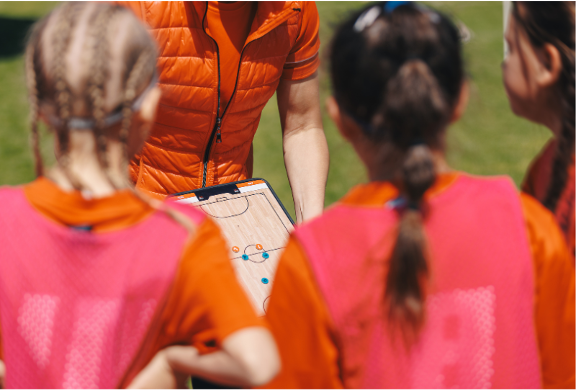
Shouting match
As someone who has always loved sports, both playing and watching them, I’ve observed the different styles of countless coaches. Many players would agree that a great sports coach is a blend of technical expertise, psychological support, and strong leadership behaviors. Great coaches prioritize athlete development over winning. While Coach B certainly knew the game of soccer and desperately wanted us to improve, he didn’t have many other “great coach” characteristics.
Also working against Coach B’s favor was the fact that he had few players on our soccer team who had the talent and motivation that any of the coaching legends in professional sports had. Perhaps that was why he yelled at us so much.
From the start of practice to the end, if Coach B wasn’t screaming at something, he was blowing his whistle to stop our play so that he could then yell at us. Though it occurred far less frequently than the use of his whistle, Coach B praised players for their good work. Compliments were rare, but when you earned one, it was like the sun was shining down and angels were singing. Naturally, it didn’t usually take long before Coach B’s whistle came back. Coach B never missed anything; you always knew when you dropped the ball with him. And there was always something for him to shout about.

All shook up
Perhaps it was a good thing, but my closest friends on the team lacked the maturity to be completely intimidated by Coach B. They were somehow able to laugh off everything. If Coach B chastised them for a bad pass or for messing up the play, they showed remorse, then almost instantly shook off the criticism.
I, on the other hand, was a little cowed by Coach B’s tirades. I didn’t grow up in a “yelling” household. I definitely wasn’t motivated by screaming. I didn’t need to know if I dropped the ball when I messed up on something minor; or frankly, something major. I couldn’t imagine enduring a drill sergeant shouting in my ear during combat training like the ones portrayed in the movies. To misquote Jack Nicholson in A Few Good Men (and also date myself by referring to a movie from 1992), “I can’t handle the truth.” Coach B was tough, but he was also fair. He respected players who were willing to put in the effort.
As a way to cope with Coach B’s style, I tried not to show any emotions. And while I wasn’t the best player on the team, I was one of the best listeners and hardest workers. I wasn’t going to drop the ball if I could help it.
Ironically, I found that by calmly staring Coach B in the eye while he was yelling—and never breaking eye contact—seemed to make him yell less at me. At least that’s what I told myself as I quivered internally.

A rash decision
In Coach B’s mind, I’m sure every game was a big game. Sadly, too much time has passed for me to remember any particularly important or momentous match. It’s a shame actually. I know this blog would be amazing if I only could tell you about how in one game, Coach B yelled a lot and we ended up doing something great. I mean, we probably did. (High school was a really long time ago, so please cut me some slack!)
But I do have a soccer story which exemplified how, behind all of his bluster, Coach B was a decent guy.
It was the day I had an allergic reaction to a medication I was taking. It must’ve been a sunny spring afternoon, because I had been wearing a pair of Umbro shorts—which were all the rage for 80s and 90s soccer players—and a t-shirt. I’d been prescribed a medication for an upper respiratory infection (don’t worry, nothing serious). After taking the medication for a few days, I felt better and went back to practice.
About thirty minutes in, we were doing some particularly challenging drills. Coach B was blowing his whistle and yelling up a storm. You could always count on someone dropping the ball. It wasn’t until I was about to practice a penalty kick that I happened to look down at my arm and saw that it was all blotchy. Like an entire arm tattoo of blotches. I checked my other arm and saw that it, too was blotchy. So were my legs.
I panicked. Not only because I likely had a full-body rash, but because I wasn’t sure how Coach B would react to me asking to leave practice. Would he think I was dropping the ball by slacking off?
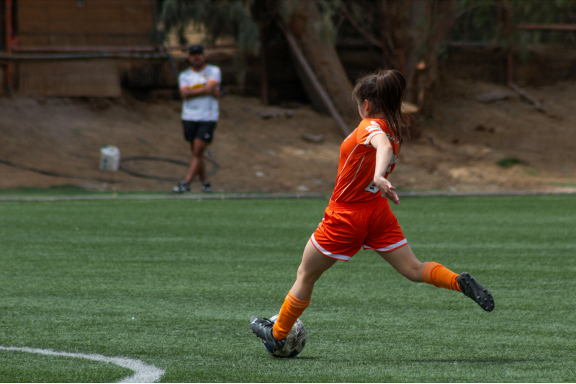
On the ball
My fears were instantly put to rest once I went over to Coach B. I must’ve been quite a sight because when I said, “I think I need to leave practice,” Coach B responded, “I’ll have the assistant coach run in to call your mother.”
By the time I’d gotten home, I had a rash from head to toe, complete with puffy eyes and lips. When Coach B called the next day to see how I was doing, thankfully it wasn’t a video call. (Those hadn’t been invented yet.)
When I returned to practice—armed with the knowledge that I was now part of the three to eight percent of the global population who are allergic to sulfa drugs—Coach B was extra cautious with me. In his own way of showing concern, Coach B kept checking on me to make sure my rash hadn’t come back. He also didn’t yell or blow his whistle at me for the entire practice.
Soon enough, that special treatment ended and Coach B went back to his old self. But for those precious few hours when Coach B gave me a pass, figuratively speaking, I knew he was a caring man deep down inside. Very deep down inside.
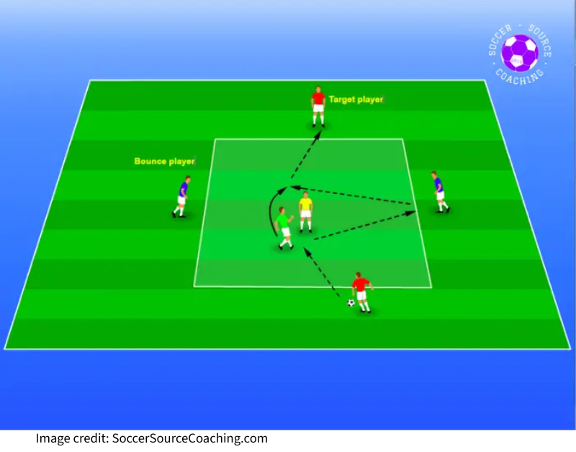
Gamechanger
Some players respond well to coaches who yell as a sign of care or perhaps even a motivator. Others may see yelling as an ineffective, potentially bullying, and excessive approach, especially in youth sports. Hopefully, coaches nowadays appreciate the difference.
Having seen the “softer side” of Coach B, I knew that, despite his tone and delivery, he was trying to teach us to be better players. By making sure we didn’t drop the ball in our intensity and focus, Coach B was probably hoping we’d someday push ourselves without him having to yell or use his whistle (though that was probably impossible).
Although I never went on to play professional soccer, I was able to apply the lessons I learned on the field to my non-soccer life. When someone invests care and time into your development, that’s a powerful thing. If that investment comes in a less-than-perfect package, don’t simply dismiss the message. There may be great benefits that can come to you by separating the content from the messenger.
I’ll admit, it wasn’t such an easy thing for me to do. But thanks to Coach B, I have seen firsthand that practice makes progress possible. And also, given the hours of drilling, I can probably still execute a give-and-go pass in my sleep. Fortunately, breaking down defenses doesn’t usually come into play while I’m writing at my desk these days. Though you never know…
Do you recall any childhood memories that had a strong impact on you later in life? Please share your stories with me in the comments section.