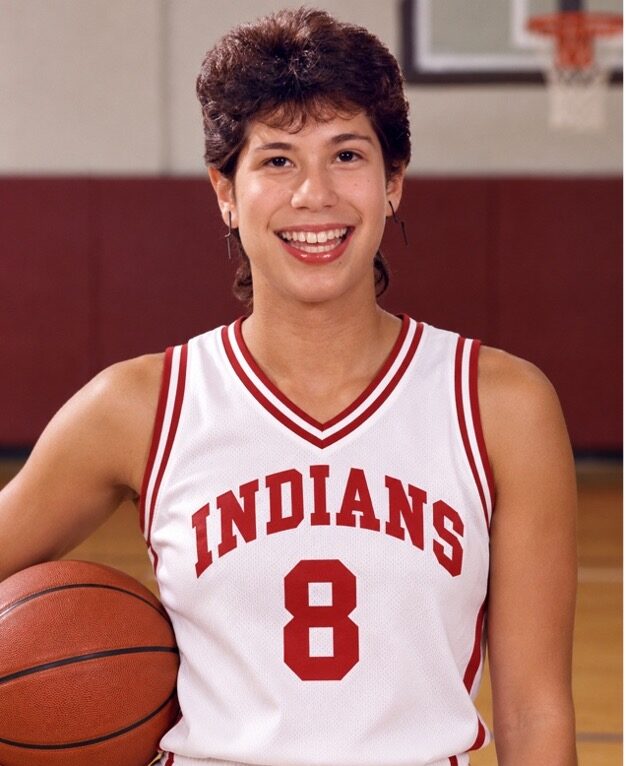
With the National Basketball Association (NBA) season just kicking off and the WNBA (women’s) season recently wrapping up, I’ve been thinking a bit about my short-lived stint playing basketball when I was younger.
Basketball is a unique sport. Players must constantly switch from offense to defense throughout the game, and with only five people from each team on the court at a time, everyone has to play their position well. Whether they are aggressively attacking the basket or using finesse and skill to make plays outside the perimeter, players make decisions in seconds rather than minutes. Given the intricacies of the modern game, it’s funny to think that basketball was originally based on simply getting a ball inside a half-bushel peach basket.
Adding basketball to my repertoire in seventh grade was a real shift for me. Having been singularly focused on soccer for thirteen years, joining a basketball team felt like moving to Mars. Unlike soccer—where you use everything but your hands—transitioning my skills to a sport that relied mainly on your hands wasn’t seamless. However, those three years I spent on the basketball team taught me an invaluable life lesson: not everyone can be a superstar, but anyone can be a good teammate (or even a good opponent). Keeping a positive attitude is a great way to make easy buckets on and off the court.
Here’s my story…
Taking a shot
One of the biggest impetuses for playing basketball in middle school was my desire to play a team sport when girls’ soccer wasn’t in season. The second reason was the footwear. I have always loved sneakers, and basketball is a sport that, in my opinion, offers the crème de la crème of sneaker styles.
When I first decided to play basketball, my practical mother wasn’t sure I’d stick with it. Because she didn’t want to invest a lot of money into what might have been a fleeting interest, we piled into the car before tryouts and trekked over to our local Marshall’s. Brand names for less, right?
I scoured the shoe aisle for a cool pair of women’s basketball sneakers in my size. At the time, the WNBA was just coming into existence, and the market wasn’t crowded with flashy signature shoes like it is today. Even though a few big-name stars like Lisa Leslie, Rebecca Lobo, and Sheryl Swoopes had endorsement deals, those shoes were nowhere to be found on Marshall’s shelves.
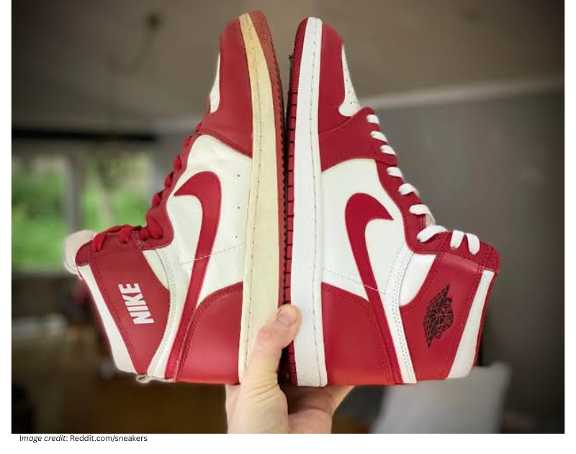
So, I improvised and headed over to the men’s department. I prayed I’d find Marshall’s version of the Nike Air Jordans. I didn’t expect them to have the signature red and black sneaker, which retailed for about sixty-five dollars. This was Marshall’s, not a full-price sporting goods store after all. Instead, I hoped Marshall’s might have a version of the Air Jordans that were a little off. Like maybe a chartreuse or puce pair in my price range (under twenty dollars). No such luck. Instead, I found a pair of red high-top Nike Team Conventions selling for the manageable price of fifteen dollars. They looked kind of like Air Jordans—as in, if you closed your eyes, opened them really fast, and turned your head while looking at them, there was some similarity.
Still, I was excited to have my first pair of basketball sneakers. After practicing basketball with my dad for several months, I was a halfway decent player by the time basketball tryouts rolled around. At least I thought I was. Turns out basketball wasn’t all easy buckets for me.
Not a slam dunk
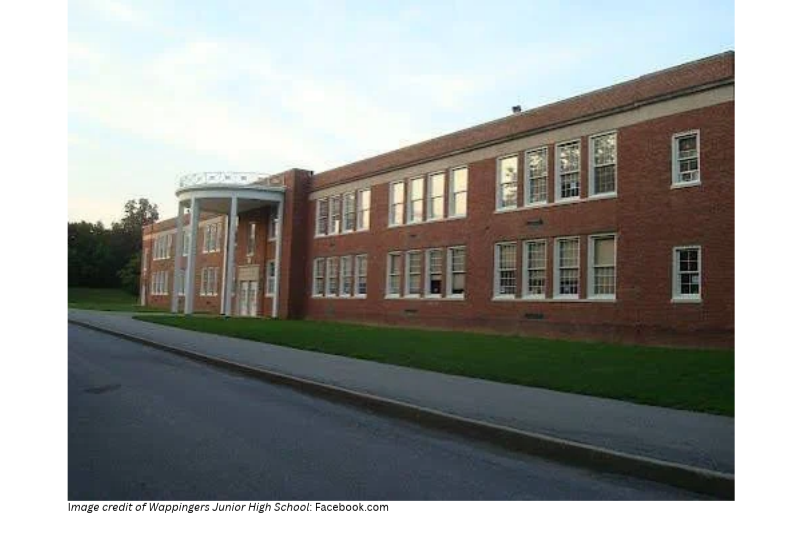
Our junior high school basketball coach was Miss Jacobs, who also doubled as the school’s physical education teacher. Miss-J-now-Coach-J was a sweet, low-key person who possessed what I recall as Midwest sensibilities. She wasn’t one of those loud, tempestuous coaches who believed fear was the best motivator. Also, I knew Coach J was from Michigan. Thankfully, Coach J had already seen my athleticism in her gym class, so she was thrilled to hear I was trying out for the basketball team.
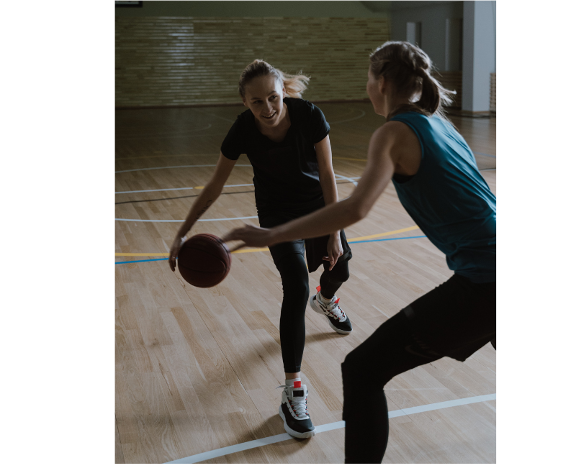
An eclectic mix of girls showed up for tryouts. There were a few very tall girls whom I knew would probably play power forward. Then there were some shorter girls who, if they could dribble or pass, would make great guards. Finally, there were the random kids like me—neither too tall nor too short. Some of the girls had never played before, while others had already been on organized teams. Since I had only practiced with my dad at the playground for several months, I fell somewhere right in the middle of the experience scale.
My biggest hurdle was that I had learned how to play basketball in a protective father-daughter bubble. My dad, who is six feet tall, had been careful not to wreck my confidence. There was no swatting the ball away when I went for a layup, or towering over me to block a jump shot. As a result, while I became fairly proficient at basketball’s technical elements, I lacked the experience of playing in fast-paced games against real competitors who didn’t have my best interests at heart. I wasn’t used to getting boxed out aggressively or being elbowed as I drove in for a layup. On this court, no one was giving me easy buckets.
But Coach J had faith in my raw capabilities, and I made the team.
Game changer
The best things going for me on the basketball court were my positive attitude and eagerness to learn. Though I was slowly improving, I wasn’t ready to play any serious minutes yet, so I sat on the bench for most of my first year. Coach J remained encouraging. She advised me to watch the action closely and pay attention to what the girls were doing in my assigned position: small forward. I wanted to complain that at five-foot-seven, I was hardly “small,” but I wisely kept my mouth shut.
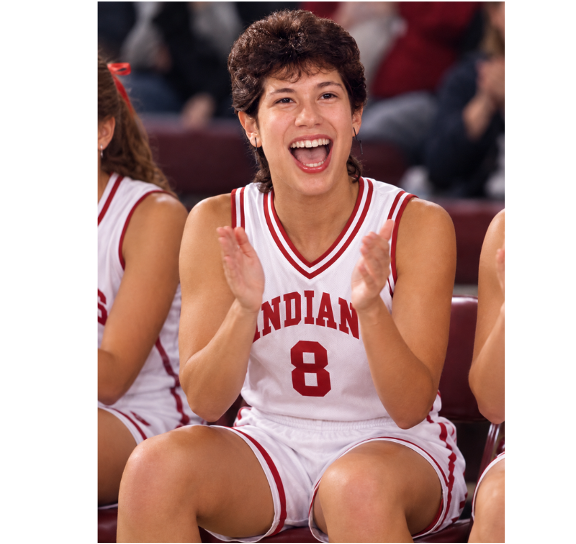
Seeing how well the first-string girls played, I didn’t mind being a benchwarmer. Yet, even as I diligently observed the game, “riding the pine” admittedly got a little boring. To make things more entertaining—mainly for myself, but also for the other girls sitting on the bench with me—I decided to get creative. I came up with fun cheers and made-up silly contests, like seeing who could shout the loudest or get the last clap. If I wasn’t excelling on the court, I could certainly do it off the court. It felt great to apply my creativity in a positive, supportive way.
As it turned out, my easy buckets were going to come from the sidelines, not the scoreboard during my stint in basketball.

Sixth (wo)man
Recognizing my limitations as a player—not to mention the fact that I enjoyed playing soccer far more—I happily embraced entertaining myself and everyone around me. I didn’t give much thought to my self-appointed role as head cheerleader for the benchwarmers. That is, until the end of the season. At our team banquet, held in a charming Italian restaurant named Da Nino’s, Coach J announced that there would be special recognition awards. Having scored a grand total of zero baskets that year, I was prepared to stay put in my seat.
But toward the end of the awards ceremony, Coach J presented me with the first-ever “team spirit” award. I distinctly recall how she cited my enthusiasm off the court and how it positively impacted everyone on the team. Well, what do you know? I thought to myself. People responded to my creativity.
What started as a simple form of amusement turned into the realization that I had a unique, albeit nonathletic, talent. The next year, with Coach J back in charge, I decided to try out for the team again, feeling a bit more confident with one year of experience under my belt.
Since it was mostly the same kids trying out for the team—and recognizing that I’d spent most of the off-season focusing on soccer—I knew I wouldn’t be seeing much court time. Basketball wasn’t exactly the source of easy buckets I had originally thought it would be. But frankly, I didn’t really care.
I was happy just to be a part of the team. And also because this meant a new pair of (still inexpensive) high tops since my foot had grown.
If the shoe fits…
While I stuck with basketball until after ninth grade, when I was on the junior varsity team, I knew my time on the court was nearing its end. The defining moment was when one of our star players named Jeannie viciously scratched my arm during practice drills (allegedly by accident). The varsity basketball players were much more competitive, and the no-nonsense varsity coach seemed like he would be less enthusiastic about supporting my spirit-building activities. And if I’m being honest, it was genuinely exhausting coming up with new material for each game. Though I’m not sure anyone but me cared.
Although I wasn’t destined for greatness on the court, I took comfort in the role I played on the sidelines. Sure, a smattering of parents attended our games, but nothing beats the feeling of teammates supporting one another and being genuinely happy for each other’s accomplishments. So, if I wasn’t going to score fifteen points a game—particularly since I didn’t score more than ten points across my entire basketball career—I would bring something else to the table. For me, that meant recognizing my biggest contribution to the team: lifting everyone’s spirits with funny cheers from the bench.
I’ll always appreciate Coach J for recognizing my intangible, non-basketball strengths. I took solace in the fact that while the star player, Jeannie, could score from almost anywhere, she was nowhere near as clever as I was. I’d like to think that if I had really wanted to be a basketball superstar, I could’ve been. But channeling my effort into something I was already good at—being creative and imaginative—has served me incredibly well in the long run. Humor and wit, rather than scoring baskets, turned out to be my easy buckets.
Plus, now that I have my own credit card, I can still buy high-top shoes even if I don’t actually play basketball. Though I don’t think I’d want to spend the money on Air Jordans at this point in my life. Harrumph. I guess my mom turned out to be right after all.
Do you recall any childhood memories that had a strong impact on you later in life? Please share your stories with me in the comments section.